
Home/Dissertation/Thesis/The Implementation and Impact of Iot Technologies on Urban Infrastructure: Smart Traffic Management, Waste Management, And Energy Efficiency
Masters
The Implementation and Impact of Iot Technologies on Urban Infrastructure: Smart Traffic Management, Waste Management, And Energy Efficiency
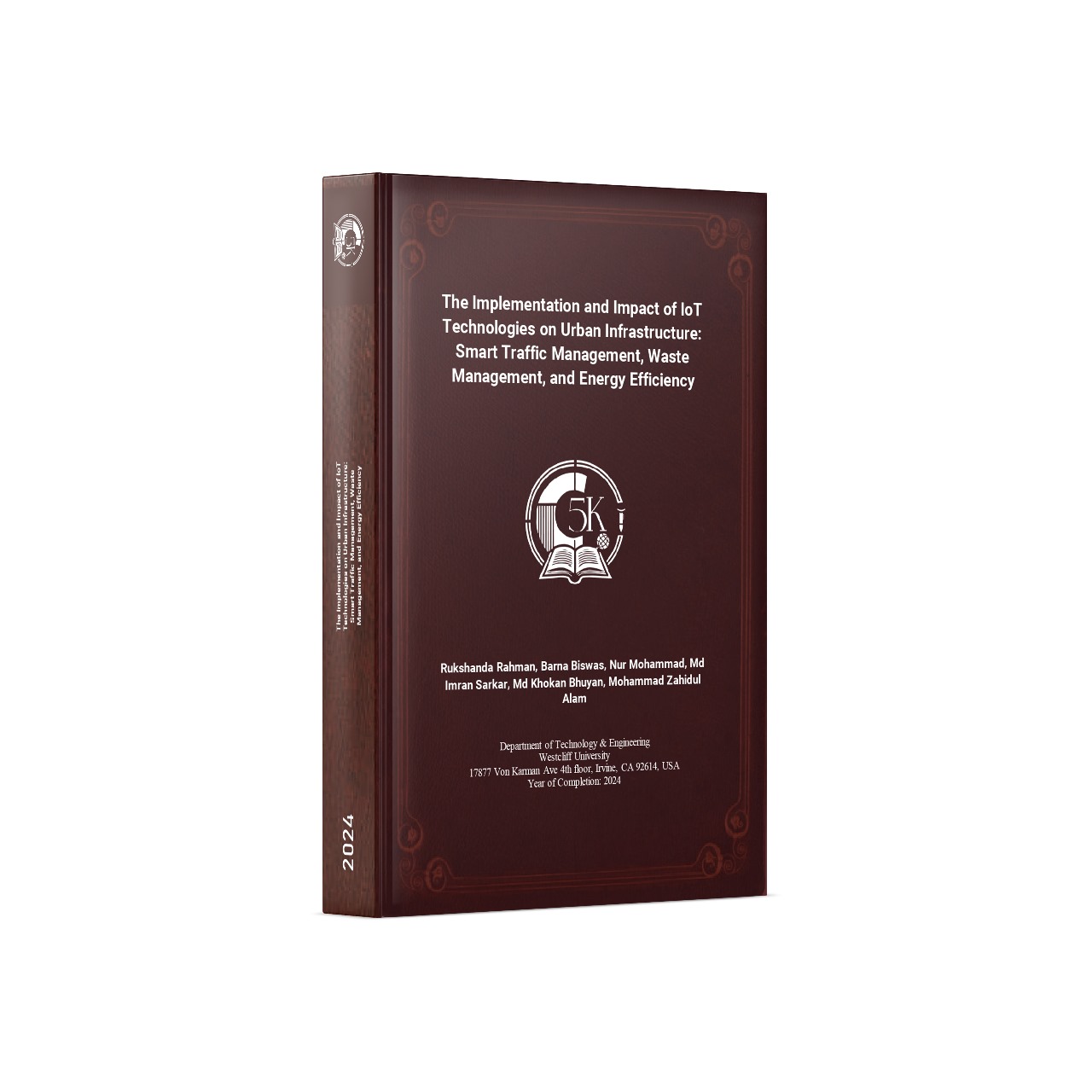
Author
Rukshanda Rahman, Barna Biswas, Nur Mohammad, Md Imran Sarkar, Md Khokan Bhuyan, Mohammad Zahidul Alam
Supervisor
N/A
University
Unknown University
Department
General
Abstract
This study explores the deployment of Internet of Things (IoT) technologies within urban
infrastructure, focusing on three key domains—smart traffic management, waste management, and
energy efficiency. It examines how interconnected sensors, real-time analytics, and automated
control systems enable cities to collect and process vast amounts of operational data, leading to
faster decision-making and more efficient resource utilization. In smart traffic management, the
research highlights IoT’s role in adaptive traffic signal control, congestion detection, and accident
response. For waste management, it investigates sensor-based collection systems and predictive
routing that optimize fleet usage and reduce environmental impact. In the area of energy efficiency,
the study evaluates IoT-enabled monitoring and automation for street lighting, public building
energy use, and renewable energy integration. Through case studies and performance metrics, the
research assesses the tangible benefits and potential limitations of IoT adoption, offering insights
into its role in building sustainable and responsive urban environments.
How to Cite
Rukshanda Rahman, Barna Biswas, Nur Mohammad, Md Imran Sarkar, Md Khokan Bhuyan, Mohammad Zahidul Alam (2026). The Implementation and Impact of Iot Technologies on Urban Infrastructure: Smart Traffic Management, Waste Management, And Energy Efficiency. Master's thesis, Unknown University, General.